25 Email Newsletter Templates That Get Attention – Boost Opens, Clicks, and Engagement

25 Newsletter Templates That Get Attention: Proven Email Examples to Boost Opens, Clicks, and Engagement

Email newsletters remain one of the most effective ways for businesses, creators, marketers, and organizations to communicate directly with their audiences. Whether you’re promoting a new product, sharing industry updates, announcing a special offer, or building customer relationships, a well-written newsletter can keep your brand in front of the people who matter most.

However, sending an email newsletter is not enough. People receive dozens of promotional messages every day, and many never make it past the subject line. To stand out, your newsletter needs an attention-grabbing headline, an engaging introduction, useful information, attractive formatting, and a clear reason for readers to take action.

This is where newsletter templates become valuable. Instead of starting from scratch every time, marketers can use proven email structures to create professional, relevant, and engaging campaigns.

In this guide, we’ll explore 25 newsletter templates that get attention, explain when to use each one, and provide practical examples you can adapt to your business. Whether you’re running an ecommerce store, SaaS company, marketing agency, nonprofit organization, or personal brand, these templates can help you create newsletters people actually want to read.

Why Newsletter Templates Matter

A newsletter template provides a repeatable structure for communicating with subscribers. It saves time, improves consistency, and makes it easier to maintain a recognizable brand identity.

Without a template, marketers may spend too much time deciding what to write, how to organize information, and where to place calls to action. A good template solves these problems by providing a starting point.

There are several advantages to using newsletter templates:

  • Save time: Reusable layouts make it easier to produce newsletters regularly.

  • Maintain consistency: Subscribers become familiar with your brand’s communication style.

  • Improve readability: Organized content helps readers find important information.

  • Encourage engagement: Strategic calls to action give readers a clear next step.

  • Support marketing goals: Different templates can support sales, education, retention, and brand awareness.

  • Simplify testing: Marketers can compare different headlines, layouts, and messaging approaches.

The most effective template is not necessarily the most complicated. It is one that delivers relevant information in a format that makes sense to the audience.

25 Newsletter Templates That Get Attention

1. The Welcome Newsletter Template

Best for new subscribers

The welcome newsletter is the first meaningful email a subscriber receives after joining your mailing list. It introduces your brand, establishes expectations, and gives new subscribers a reason to remain interested.

A strong welcome email should feel personal rather than overly promotional. Thank subscribers for joining, explain what they can expect, and introduce your most useful resources.

Suggested subject line: Welcome! Here’s What You Can Expect From Us

Template example:

Hi [First Name],

Welcome to [Brand Name]!

We’re excited to have you as part of our community. You’ll receive useful insights, practical tips, product updates, and exclusive information designed to help you get more from [industry or subject].

To get started, check out our most popular resources.

[Explore Our Resources]

Thanks for joining us!

The [Brand Name] Team

2. The Weekly Tips Newsletter Template

This template is ideal for businesses that want to provide consistent value without making every newsletter a sales pitch.

Share three to five practical tips related to your industry. Keep each tip short, specific, and actionable.

Suggested subject line: 5 Simple Ways to Improve Your Marketing This Week

Template example:

Hi [First Name],

Looking for practical ways to improve your results this week?

Here are five tips worth trying:

  1. Review your current marketing performance.

  2. Improve the clarity of your website headlines.

  3. Remove unnecessary steps from your customer journey.

  4. Follow up with interested prospects.

  5. Test different email subject lines.

Small improvements can produce meaningful results when applied consistently.

[Read More Tips]

See you next week!

3. The Product Announcement Newsletter Template

Best for product launches

Whenever your business introduces a new product, feature, or service, a product announcement newsletter can help generate interest.

The email should explain what is new, why it matters, and how customers can access it. Focus on the benefits rather than simply listing technical specifications.

Suggested subject line: It’s Here! Discover Our Latest Product

Template example:

Hi [First Name],

We have something exciting to share!

Introducing [Product Name], our latest solution designed to help you [main customer benefit].

With this new release, you can:

  • Save time on everyday tasks.

  • Simplify your workflow.

  • Improve productivity.

  • Get more value from your existing tools.

Ready to see what it can do?

[Discover the New Product]

Thank you for being part of our journey.

4. The Special Offer Newsletter Template

Special offer newsletters are designed to encourage immediate action through discounts, promotional packages, or exclusive deals.

They work particularly well for ecommerce businesses, online retailers, subscription services, and seasonal campaigns.

Suggested subject line: A Special Deal Just for You – Save 25% Today

Template example:

Hi [First Name],

We’ve got something special for you!

For a limited time, enjoy 25% off selected products at [Brand Name].

Whether you’re shopping for something new or restocking your favorites, this is a great opportunity to save.

Use code: SAVE25

[Shop the Offer]

Don’t miss out. This promotion ends on [Expiration Date].

5. The Company News Newsletter Template

This template keeps subscribers informed about important developments within your organization.

You can use it to announce company milestones, new partnerships, leadership updates, expansion plans, awards, and other relevant achievements.

Suggested subject line: What’s New at [Company Name]?

Template example:

Hello [First Name],

There’s been plenty happening at [Company Name], and we’d love to share a few updates.

Here’s what’s new:

  • We’ve introduced improvements to our services.

  • Our team has expanded.

  • We’ve started working on exciting new projects.

  • We’re preparing additional resources for our customers.

We’re grateful to everyone who continues to support our growth.

[Read Our Latest Updates]

6. The Educational Newsletter Template

Educational newsletters are particularly useful for companies operating in technology, finance, healthcare education, marketing, professional development, and other knowledge-driven industries.

The objective is to teach subscribers something useful rather than immediately asking them to buy.

Suggested subject line: What Every Business Owner Should Know About Email Marketing

Template example:

Hi [First Name],

Want to improve your understanding of [Topic]?

This week, we’re looking at three important concepts:

1. Understand the fundamentals: Learn the principles behind successful [topic].

2. Avoid common mistakes: Identify problems that could affect your results.

3. Apply what you’ve learned: Turn useful information into practical improvements.

Explore our latest guide for a deeper explanation.

[Read the Complete Guide]

7. The Curated Content Newsletter Template

A curated newsletter collects useful articles, reports, videos, industry resources, and other content in one convenient email.

It is especially effective for publishers, bloggers, marketing professionals, and organizations that regularly produce or discover valuable information.

Suggested subject line: 7 Things Worth Reading This Week

Template example:

Hi [First Name],

We’ve collected some useful resources to help you stay informed.

Here’s this week’s reading list:

  • [Article One]: A practical guide to improving productivity.

  • [Article Two]: Important developments in digital marketing.

  • [Article Three]: New tools worth exploring.

  • [Article Four]: Strategies for growing your business.

  • [Article Five]: Lessons from successful entrepreneurs.

Take a look at the resources that interest you most.

Happy reading!

8. The Customer Testimonial Newsletter Template

Customer testimonials help businesses demonstrate credibility through real customer experiences.

This template highlights a customer success story, explains the problem they faced, and shows how your product or service helped.

Suggested subject line: Here’s How Our Customers Are Getting Results

Template example:

Hi [First Name],

We love hearing how our customers use [Product or Service] to achieve their goals.

This week, we’re highlighting a customer who wanted to improve [specific challenge].

After implementing [solution], they reported [verified result].

Their experience demonstrates what can happen when the right tools and strategies come together.

Want to explore similar opportunities?

[Discover Customer Stories]

Always obtain permission before publishing customer names, photographs, or testimonials.

9. The Event Invitation Newsletter Template

Event invitation newsletters help organizations promote webinars, conferences, workshops, training sessions, product demonstrations, and networking opportunities.

Include the event title, date, time zone, location or access information, and registration link.

Suggested subject line: You’re Invited! Join Our Upcoming Business Webinar

Template example:

Hi [First Name],

We’d love you to join us for an upcoming event!

Event: [Event Name]

Date: [Date]

Time: [Time and Time Zone]

Location: [Online or Physical Location]

During this session, we’ll discuss [main topics] and share practical insights you can apply immediately.

Reserve your place today.

[Register Now]

We look forward to seeing you!

10. The Seasonal Newsletter Template

Seasonal newsletters connect your brand with relevant times of the year, including Christmas, Thanksgiving, Halloween, Valentine’s Day, summer holidays, and back-to-school periods.

They are useful for ecommerce businesses, travel companies, hospitality brands, and service providers.

Suggested subject line: Get Ready for the Season With These Special Picks

Template example:

Hi [First Name],

A new season is here, and it’s the perfect opportunity to discover something fresh!

We’ve selected a few ideas, products, and recommendations to help you make the most of the season.

Explore our latest collection and discover something you’ll love.

[Explore Seasonal Favorites]

Wishing you a wonderful season!

11. The Monthly Roundup Newsletter Template

A monthly roundup summarizes the most important things your company has published, achieved, or introduced over the previous month.

It works well for businesses with active blogs, news websites, professional communities, and educational platforms.

Suggested subject line: Your Monthly Update: The Best of [Month]

Template example:

Hello [First Name],

Here’s your monthly roundup from [Brand Name].

This month, we’ve published:

  • Our latest industry guide.

  • A new collection of practical resources.

  • Important company announcements.

  • Expert advice and useful recommendations.

We’ve gathered everything in one place so you can catch up whenever it’s convenient.

[Explore This Month’s Highlights]

12. The Limited-Time Newsletter Template

This template creates urgency around a genuine deadline. It can promote registration deadlines, seasonal promotions, special packages, or limited enrollment periods.

Avoid artificial countdowns or misleading scarcity claims. The deadline should be real.

Suggested subject line: Final Reminder: This Offer Ends Soon

Template example:

Hi [First Name],

Just a quick reminder that our [Offer Name] promotion ends on [Date].

You still have an opportunity to take advantage of:

  • [Benefit One]

  • [Benefit Two]

  • [Benefit Three]

If you’ve been considering [Product or Service], now is a good time to take a closer look.

[Claim Your Offer]

The promotion closes on [Date and Time].

13. The Behind-the-Scenes Newsletter Template

Behind-the-scenes newsletters make a business feel more approachable by showing the people, processes, and ideas behind the brand.

Share a team introduction, product development story, company culture update, or explanation of how your service works.

Suggested subject line: A Little Behind the Scenes at [Company Name]

Template example:

Hi [First Name],

Have you ever wondered what happens behind the scenes at [Company Name]?

This week, we’re giving you a closer look at how our team works.

From planning new projects to improving customer experiences, every step is guided by our commitment to [company value].

Here’s a glimpse of what we’ve been working on.

[Take a Look Behind the Scenes]

14. The Industry Trends Newsletter Template

This newsletter positions your brand as an informed voice within its industry.

Discuss important developments, emerging technologies, changing customer expectations, and new opportunities.

Suggested subject line: 5 Industry Trends Businesses Should Watch

Template example:

Hello [First Name],

The business landscape continues to evolve, and staying informed can make a significant difference.

Here are five developments worth watching:

  1. Artificial intelligence and automation.

  2. Changing customer expectations.

  3. Data-driven decision-making.

  4. New digital communication channels.

  5. Greater demand for personalized experiences.

Understanding these developments can help your organization prepare for what’s next.

[Explore the Trends]

15. The Free Resource Newsletter Template

Free resource newsletters encourage subscribers to download useful materials such as ebooks, templates, checklists, worksheets, guides, and reports.

They are especially useful for lead generation and audience building.

Suggested subject line: Your Free Business Growth Toolkit Is Ready

Template example:

Hi [First Name],

We’ve created something useful for you!

Download our free [Resource Name], designed to help you [specific benefit].

Inside, you’ll discover:

  • Practical recommendations.

  • Step-by-step instructions.

  • Helpful examples.

  • Actionable checklists.

Get your copy today.

[Download Your Free Resource]

We hope you find it useful!

16. The Re-Engagement Newsletter Template

Not every subscriber will remain active forever. Some people stop opening emails because their interests change, their inboxes become crowded, or your messages are no longer relevant.

A re-engagement newsletter gives inactive subscribers a reason to reconnect.

Suggested subject line: Still Interested? We’d Love to Hear From You

Template example:

Hi [First Name],

It’s been a little while since we’ve seen you around!

We want to make sure you’re still receiving information that matters to you.

At [Brand Name], we’re continuing to share useful insights, updates, and exclusive resources.

Would you like to keep hearing from us?

[Yes, Keep Me Updated]

You can also update your email preferences or unsubscribe whenever you wish.

17. The New Subscriber Exclusive Newsletter Template

This template rewards subscribers with information or benefits that are not immediately available to the general public.

It works well for membership businesses, online stores, subscription services, and premium communities.

Suggested subject line: Your Subscriber-Only Benefits Are Here

Template example:

Hi [First Name],

Being part of our community comes with a few extra benefits!

As a subscriber, you can enjoy:

  • Early access to selected updates.

  • Exclusive educational resources.

  • Special promotional opportunities.

  • Helpful tips from our team.

Thank you for being part of [Brand Name].

[Explore Your Benefits]

18. The Problem-Solution Newsletter Template

One of the strongest newsletter structures begins with a problem the reader recognizes and then presents a practical solution.

This approach is particularly effective for B2B companies, software providers, consultants, agencies, and professional service businesses.

Suggested subject line: Spending Too Much Time on Repetitive Business Tasks?

Template example:

Hi [First Name],

Many businesses spend valuable hours completing repetitive tasks that could be simplified through better systems.

The result? Less time for important work and more pressure on employees.

Fortunately, there are ways to improve the situation.

By introducing [Product or Strategy], businesses can streamline processes, improve consistency, and make better use of their resources.

Want to see how it works?

[Discover the Solution]

19. The Question-and-Answer Newsletter Template

Question-and-answer newsletters address common concerns from customers and subscribers.

They are useful for software companies, educational organizations, service providers, and businesses with complex products.

Suggested subject line: Your Top 5 Questions About [Topic], Answered

Template example:

Hi [First Name],

We’ve received some interesting questions from our community, so we’re answering five of the most common ones.

Question 1: What is [Topic]?

Answer: [Clear explanation.]

Question 2: Who should use it?

Answer: [Practical explanation.]

Question 3: What are the main benefits?

Answer: [List the benefits.]

Question 4: How much does it cost?

Answer: [Pricing information.]

Question 5: How can I get started?

Answer: [Getting-started instructions.]

Have another question? Send it to our team!

[Contact Us]

20. The Holiday Greetings Newsletter Template

Holiday greetings are an opportunity to strengthen relationships with subscribers without constantly selling products.

A simple, sincere message can help your business remain memorable during important celebrations.

Suggested subject line: Happy Holidays From Everyone at [Company Name]

Template example:

Hi [First Name],

As the holiday season arrives, everyone at [Company Name] wants to wish you a wonderful celebration.

Thank you for choosing us, supporting our work, and being part of our growing community.

We appreciate your trust and look forward to sharing more exciting experiences with you.

Warm wishes,

The [Company Name] Team

21. The New Blog Post Newsletter Template

Publishers, bloggers, content marketers, and professional websites can use this newsletter to direct subscribers to recently published articles.

Rather than simply announcing that a new article exists, explain what readers will learn and why the content is worth their time.

Suggested subject line: New on Our Blog: How to Grow Your Business Online

Template example:

Hi [First Name],

We’ve just published a new article that we think you’ll find useful.

How to Grow Your Business Online: Practical Strategies That Work

In this guide, we explore ways to improve your online visibility, reach potential customers, and build stronger digital marketing campaigns.

If growing your online presence is one of your goals, this is worth reading.

[Read the New Article]

Enjoy!

22. The Customer Appreciation Newsletter Template

Customer appreciation newsletters recognize the people who support your business.

They can be sent after a major milestone, at the end of the year, during an anniversary celebration, or simply as a relationship-building exercise.

Suggested subject line: Thank You for Being Part of Our Journey

Template example:

Hi [First Name],

We want to take a moment to say thank you.

Your continued support means a great deal to everyone at [Company Name].

Every purchase, recommendation, message, and interaction helps us improve and grow.

We’re committed to providing even better experiences in the future.

Thank you for being part of our story!

23. The Comparison Newsletter Template

Comparison newsletters help subscribers understand the differences between products, services, strategies, or technologies.

They work particularly well for SaaS businesses, technology companies, financial education publishers, and B2B marketers.

Suggested subject line: Which Is Better for Your Business: [Option A] or [Option B]?

Template example:

Hi [First Name],

Choosing between [Option A] and [Option B] can be challenging.

Both approaches have advantages, but the right choice depends on your goals.

Here’s a quick breakdown:

Option A

  • Best for [use case].

  • Offers [main advantage].

  • May require [consideration].

Option B

  • Best for [use case].

  • Offers [main advantage].

  • May require [consideration].

The important thing is to choose an approach that supports your business requirements.

[Read the Full Comparison]

24. The Referral Program Newsletter Template

Referral newsletters encourage existing customers to recommend your products or services to other people.

They are particularly useful for membership platforms, ecommerce brands, SaaS companies, and subscription businesses.

Suggested subject line: Know Someone Who Could Benefit? Share the Love!

Template example:

Hi [First Name],

Good experiences are even better when shared!

If you’ve enjoyed using [Product or Service], why not introduce it to someone who might find it useful?

Through our referral program, you can [explain the actual referral reward or benefit].

Getting started is simple:

  1. Visit your referral account.

  2. Copy your personal referral link.

  3. Share it with friends or colleagues.

  4. Enjoy the benefits when qualifying referrals are completed.

[Share Your Referral Link]

Thanks for spreading the word!

25. The Personalized Newsletter Template

Personalized newsletters use subscriber information, preferences, interests, and previous interactions to make messages more relevant.

Rather than sending every subscriber exactly the same content, businesses can tailor recommendations and information to different audience segments.

Suggested subject line: [First Name], We Found Something You Might Like

Template example:

Hi [First Name],

Based on your interest in [Topic or Category], we’ve selected a few resources that may be useful to you.

Here are our recommendations:

  • [Recommended Article]

  • [Recommended Product]

  • [Useful Resource]

We’ve chosen these recommendations to help you get more value from your experience with [Brand Name].

[Explore Your Recommendations]

Enjoy your personalized update!

How to Write Newsletter Emails That Get More Attention

Having 25 newsletter templates is a useful starting point, but the quality of the final email depends on how you use them. A template cannot compensate for irrelevant information, confusing messaging, or poor audience targeting.

Here are some practical ways to improve newsletter performance.

1. Write Subject Lines That Create Curiosity

The subject line is often the first thing subscribers notice. It should communicate a clear benefit or give readers a compelling reason to open the email.

For example, instead of writing “Our Latest Business Newsletter,” consider “7 Ways to Improve Your Business Marketing This Month.”

Avoid misleading subject lines. Creating curiosity is useful, but the content must deliver what the subject promises.

2. Make the Opening Paragraph Interesting

The opening paragraph should quickly explain why the email matters.

Start with a recognizable problem, an interesting observation, a useful question, or an important announcement.

Avoid long introductions that delay the main message. Subscribers should understand the purpose of your email within the first few sentences.

3. Keep Your Content Easy to Scan

Most people do not read marketing emails word for word. They scan headings, short paragraphs, bullet points, and highlighted information.

Use clear headings and concise paragraphs. Make important information easy to find without forcing subscribers to read unnecessary text.

4. Use One Primary Call to Action

Every newsletter should have a purpose.

You may want readers to purchase a product, download a guide, register for an event, read an article, or update their preferences.

Choose one primary action and make it easy to identify. Additional links are acceptable when they support the main objective, but too many competing calls to action can weaken the message.

5. Personalize Beyond the Subscriber’s Name

Adding someone’s first name is a basic form of personalization. More useful personalization involves understanding what different subscribers actually want.

For example, an ecommerce business can recommend products based on customer interests, while a software company can send educational content based on the subscriber’s experience level.

Relevant segmentation can make newsletters more useful and reduce unnecessary messages.

6. Optimize for Mobile Devices

A significant proportion of email reading takes place on smartphones and tablets.

Use responsive layouts, readable fonts, appropriately sized buttons, and images that adjust to different screen sizes.

Test your newsletter on multiple devices before sending it to your full list.

7. Test Different Newsletter Approaches

Email marketing should be measured rather than based entirely on assumptions.

Test subject lines, sending times, content length, calls to action, and different newsletter formats.

When conducting A/B tests, change one major variable at a time where practical. This makes it easier to understand what influenced the results.

Pay attention to clicks, conversions, replies, unsubscribes, and other meaningful engagement indicators. Open rates can be useful, but privacy features and automated image loading can make them less reliable.

Best Email Marketing Tools for Creating Newsletter Campaigns

Choosing the right email marketing platform can make newsletter creation, automation, segmentation, and performance tracking much easier.

Here are some popular platforms worth considering.

1. Brevo

Brevo offers email marketing, automation, contact management, and campaign reporting. It is useful for businesses that want to manage marketing communications and customer relationships through one platform.

2. Mailchimp

Mailchimp is widely recognized for its email campaign creation tools, audience management features, and marketing automation capabilities. It can be useful for small businesses, online stores, and content creators.

3. MailerLite

MailerLite provides newsletter creation, landing pages, automation, and subscriber management. Its straightforward interface makes it attractive to creators and smaller businesses.

4. Campaign Monitor

Campaign Monitor focuses on email campaign design, subscriber segmentation, and reporting. It is worth considering for organizations that place significant importance on branded newsletter layouts.

5. ActiveCampaign

ActiveCampaign combines email marketing with customer experience automation and CRM-related features. It is particularly relevant for businesses that need more sophisticated customer journeys.

Before choosing a platform, compare pricing, subscriber limits, automation features, template flexibility, integrations, reporting, and sending requirements.

Common Newsletter Mistakes to Avoid

Even professionally designed newsletters can underperform when basic email marketing principles are ignored.

Some common mistakes include:

  • Sending emails too frequently: Excessive messaging can cause subscriber fatigue and increase unsubscribes.

  • Using vague subject lines: Subscribers may not understand why the message is relevant.

  • Writing overly promotional content: Newsletters should provide value rather than constantly asking for purchases.

  • Ignoring email authentication: Proper SPF, DKIM, and DMARC configuration helps establish sending-domain authenticity.

  • Purchasing questionable email lists: Unsolicited lists can damage sender reputation and create legal compliance problems.

  • Using too many images: Large images and image-only emails can create accessibility and rendering problems.

  • Forgetting unsubscribe links: Subscribers should have a clear way to stop receiving marketing messages.

  • Ignoring analytics: Without measuring performance, it becomes difficult to improve future campaigns.

Businesses should also follow applicable email marketing regulations, including CAN-SPAM requirements in the United States and other relevant privacy and electronic communications laws.

Conclusion

Creating newsletters that get attention requires more than attractive designs and clever subject lines. Successful email communication combines useful information, relevant messaging, thoughtful presentation, and clear calls to action.

These 25 newsletter templates provide practical starting points for different marketing objectives, including welcoming subscribers, promoting products, sharing educational resources, announcing company news, encouraging referrals, and maintaining customer relationships.

The best approach is to select a template that matches your campaign objective, adapt the language to your audience, and test different versions to discover what produces meaningful results.

Remember that people subscribe to newsletters because they expect something valuable in return. Give them useful information, respect their inboxes, and make every email worth opening.

Over time, a consistent and well-planned newsletter strategy can help your business build trust, increase website traffic, strengthen customer relationships, and generate more sales.


Tips for Promoting Your Business on Social Media

Free Top view anonymous remote worker typing on keyboard of laptop with blank screen while sitting with crossed legs on bed with tea aside at home Stock Photo

Since the vast majority of people now have an online presence, businesses need to invest far more in public relations and social media marketing than they used to. Businesses can promote themselves and achieve great results by employing a few tried-and-true strategies for social media marketing.

  • Strategy
  • Consistency
  • Content
  1. Strategy

Any marketing campaign needs to have a plan behind it. Beyond that, businesses need to determine their goals for each social media platform they plan to use. This is because there will be significant differences between the various platforms. Because of this, businesses have to pick and choose what will actually help them. In this way, we can be confident that the content will pique the interest of its target demographic. This requires making changes to the presentation and structure of the original content concept.

Due to the millennial generation, businesses must think about things like the rationale behind their platform choices. This includes the intended audience, the type of content that will thrive on the platform and captivate its users, the brand messages the company hopes to convey, and the numerous ways in which the content can be differentiated from the competition. In doing so, the business separates itself from its rivals.

  1. Consistency

A business’s content distribution schedule on social media must change from platform to platform. Nonetheless, consistent material distribution is needed.

Businesses may remain on top of their social media content by creating a content calendar. This form of calendar describes the type of material the company must develop and deliver over a longer period of time. Regardless of the size of the business, the industry, or the platform used, it is important to think about hashtags, brand messaging and image, and publishing regularity when creating and sharing content on social media.

The quality of content, rather than its quantity, should be a company’s top priority when first venturing into the world of social media, as it can be challenging to manage a wide variety of channels with a large quantity of information on each.

  1. Content

Millions of people and businesses use social media platforms. This means that businesses need to make an effort to differentiate themselves from the competitors. Creating high-caliber content is the most efficient strategy. This term is often rather relative and highly reliant on the modalities employed.

It’s important for businesses to remember that the information they share with the public should be of newsworthy quality. This means that a larger audience will use it. To do so, you must develop material that is either provocative, pertinent, topical, or focused on a tale of human interest.

Additionally, businesses need to keep an eye on emerging trends if they want to create timely and appropriate content. In addition, they employ narrative to enthrall the intended demographic and strengthen the tone of the brand’s overall communication. This tone is helpful for establishing rapport with clients and gaining their trust.

5 Ways to Improve Your Email Marketing Campaign For Black Friday

Free White Apple Magic Mouse Beside Silver Macbook On Black Background Stock Photo

Companies risk getting drowned out in the Black Friday marketing frenzy, despite the fact that they stand to gain a great deal. Here’s how you can leverage the potential of email on black Friday.

  • Make preparations in advance
  • Determine your ideal customer
  • Pay attention to the headings
  • Build Anticipation
  • Improve abandoned cart email
  1. Make preparations in advance

While it may be tempting to blast your database with a blanket “20% discount” promotion, putting in the time to strategize the best way to reach them with your message will yield far better results. Take some time to go through your database. Take a look at your characters with fresh eyes and make sure you’re tailoring your offers to their needs. Iterate through the database multiple times in the weeks leading up to Black Friday to re-engage users.

  1. Determine your ideal customer

The number one guideline of email marketing is to prioritize the most valuable customers. Provide them with exclusive content or early access, and tailor things to the tastes of your most committed customers. Black Friday campaigns should continue to prioritize retention as a key performance indicator. It is easier to sell to those who are already familiar with your brand, so focus on your past customers. Remind people who have made purchases from you before that it may be time to refill.

  1. Pay attention to the headings

Unread email is a squandered opportunity. During Black Friday, in particular, emails must stand out because the inbox tends to be packed. Preparation and trial and error are key. Topic lines can benefit from humor and pain points if you use them effectively.

  1. Build Anticipation

The retail marketplace on Black Friday is a cacophony of brand noise. Accelerating in front might assist raise consumer anticipation and educate them of your sale plans. An effective strategy in this case is to create a sense of FOMO among customers by giving them a preview of the product or service before it officially launches.

Be honest about the timelines involved and the conditions of the deal. Make it clear whether you’re willing to keep the sale going past its original end date in order to maximize your profits by delaying the end of the sale to the last possible moment.

  1. Improve abandoned cart email

With so many transactions finalized on Black Friday, it’s easy to lose sight of the fact that many shoppers abandon their carts in search of better prices. Perhaps you might foresee and prevent some of these problems by conducting a thorough customer journey analysis before releasing a new product or service. Assessing your CRM’s abandoned cart email settings is the next step after fixing your customers’ experiences. By default, they could be up to 48 hours; try getting them down to about an hour. Notifications delivered promptly on Black Friday are crucial.

7 Effective Marketing Strategies To Grow Business Faster

As an online business, you never seem to run out of new marketing strategies that will boost sales, provide a wider audience reach, and boost your brand’s reputation.

However, effective marketing strategies are not so hard to decide on. Properly conducted they could mean a significant boost for your business. Here are 7 helpful tips to ensure your marketing strategy is effective.

Create a Website and Optimize the Content

A website is an essential part of any marketing strategy, but you need to make sure it has high-quality content that will appeal to your audience. If possible, get professional help to optimize your content for search engines like Google and Bing. This will help people find your site easily when they type keywords related to your business into their search engine of choice.

Focus on Customer Experience

The first thing you need to do is focus on your customer experience. You can’t have a great customer experience without a great product, but you also need to take care of all the other little details that make your company stand out. The first thing you should do is put yourself in the customer’s shoes and think about what they would want from you as a company. Then, think about how you can provide it or at least get close. If a customer doesn’t have a good time interacting with your brand, then they probably won’t come back and may not recommend your business to others.

Create an email marketing campaign

Email is still one of the most effective ways to reach your audience and engage with them on a personal level. With over 4 billion users, email marketing is one of the most effective marketing strategies you can use. It is also affordable and allows you to provide valuable content about your business and its services in a personal easy-to-consume format.

Partner with influencers

Influencer marketing has been around for years now, but many businesses are just starting to realize how powerful this strategy can be when used correctly. Influencers are people who have a large following online (usually through social media), which means they have an opportunity to share information about your product or service with thousands of potential customers at once!

Modify Old Content

It’s easy to fall into the trap of thinking that creating new content is the most crucial aspect of effective marketing strategies. Sometimes, all you need is to repurpose old content. If you put a lot of effort into making some old content, it’s likely that it’s still a great pick today and just needs a little tweaking. So before discarding all old contents, find out which ones fit the category of “old, but gold!”

Leverage Customer Reviews and User Generated Content

Customer reviews are one of the most powerful tools you have at your disposal as a marketer. Not only do they give potential customers a chance to read about how other people have experienced your product or service, but they also allow you to see what people are saying about your brand. User-generated content is another great way to get an inside look at what people are thinking about your brand. When users create content, on it gives you insight into how they feel about your company and how best you can serve them better for effective marketing.

Be Active on Social Media

Finally, don’t forget about social media! It’s no secret that people spend more time on social media than anywhere else online making it one of the best platforms for productive marketing. If your business is online, then social media platforms are indispensable as effective marketing strategies. It doesn’t matter if it’s Facebook, Twitter, or Instagram. To start, look at what kinds of content they enjoy and share on social media. Do they like long articles? Short videos? Photos? Take note and then try creating something similar that’s specifically tailored to them.

Conclusion

With marketing, there are no hard and fast rules. However, these tips will help you manage effective marketing strategies that help grow your business and keep you competitive in the marketplace.

11 Best Email Marketing Software to Grow Your Business

In today’s competitive environment, the importance of good marketing cannot be overstated.

Here are the top 11 marketing apps to help your small business grow.

MailMunch

This software is easy to set up. It is Customizable, mobile-friendly forms include popups, banners, bars, and embedded forms for email collection. It can also integrate CRM softwares as well.

AWeber

If you are new to email marketing, then AWeber offers regular live webinars for other instruction and training. With access to data and reports, you will get the much-needed insight you need to make better decisions, devise and implement better strategies, and achieve success.

MailChimp

This software is well-known for its low-cost plans that are ideal for startups, but it also provides business-enhancing analytical features and strong technology tools that enable users to effectively use email to communicate with clients and prospective customers, advertise their products and services with ease see more lead conversions that result in more sales.

MailerLite

This email marketing software is directed towards small businesses, providing them a robust and powerful platform that so well complements existing content marketing platforms and strategies. Though it may appear simple it comes with all the professional features of any marketing software.

OptinMonster

With its emphasis on attracting mobile traffic and converters, OptinMonster functions best on mobile devices as well. It provides lead generation integration as well as split A/B testing of your campaigns.

Sumo

With Sumo solutions, you can increase the number of your signups, attract more subscribers, encourage visitors to share your content, and more. With displays optimized for desktop and mobile devices, you can create beautiful pop-ups for effective email captures, attract more visitors, and encourage them to stay and explore your websites.

Litmus

Litmus also provides instant previews on all devices, including mobile and desktop, to ensure that you have extensive compatibility. It also has amazing templates to pick from that allow you to build your email from scratch, and because of their in-depth analytics, you can also choose from their tested templates that have worked in other places.

Hubuco

Hubuco is known for its email validation. This email marketing tool allows you to easily perform bulk email verification and validation on any opt-in list. Hubuco ensures that you only send emails to real people and assists you in distinguishing low-quality addresses from high-value contacts. Hubuco classifies email addresses as deliverable, undeliverable, risky, or unknown and includes a ‘Hubuco Sendex score’ feature to assess the quality of each email address.

MailGet

MailGet’s email list cleaning tool has a number of additional features for list cleansing that only a few email marketing software providers offer. Furthermore, there are three types of clean segments on which software operates: spam list, suspended list, and bounce list.

SubjectLine

This will evaluate any subject line and provide an instant score based on email marketing best practices. You’ll receive immediate, actionable advice, allowing you to continue fine-tuning your subject until you achieve the desired results.

Headline Analyzer

The free CoSchedule Headline Analyzer digs deeper to score your headline’s word choices. It allows you to adjust the reading level as well as the “word balance,” allowing you to access more evocative words. Furthermore, you can easily compare previous headlines.

Hemingway

Are you worried that your message will go over your readers’ heads? The Hemingway App, named after the man best known for his short sentences, focuses on the readability of your subject line. If you want, you can even use it to analyze entire blog posts.

Conclusion

Remember that you will require patronage to successfully launch and sustain your business. One way to accomplish this is to have a great email marketing app that can assist your small business in growing.

Most Effective Techniques To Improve CTR Through SERP

Paid listings now appear above organic ones in Google’s search results. The click-through rate (CTR) decreases as a result of these changes to search engine rankings. In order to meet the needs of its users, Google has implemented these changes. As a result, organic listing clicks plummet, as users may now find the information they want directly on the search results page. Still, there are ways to improve CTR.

  • Make Efforts to Improve Your Ranking Position
  • Use Knowledge Panels on Your Social Media Sites to Promote Your Brand
  • Make sure your images and videos are optimized
  • Targeted Pay-Per-Click Advertising (PPC)

Make Efforts to Improve Your Ranking Position

Ranking in the top three of organic search results provides an additional benefit. A recent investigation by Backlink revealed some startling findings. It has been found that a website’s CTR might rise by 30% if it moves up one position in the rankings. Your website’s current position and its new position affect the amount of rise in CTR.

It was fascinating to see how CTR varies depending on the posture of the user. There is a difference between a jump from tenth to seventh position and a jump from second to first. Marketers were advised to target the top three spots on the first page in order to increase their CTR.

Use Knowledge Panels on Your Social Media Sites to Promote Your Brand

Using social media to promote your business is essential. Increasing your CTR is easy if your social media channels are integrated into knowledge panels. Search engines use knowledge panels to present your company’s information in a logical order. Your social network profiles can be linked to from search engine results pages, allowing users to contact you directly.

Make sure your images and videos are optimized

Images, videos and highlighted snippets are now appearing at the top of organic search results. Additionally, SERPs are increasingly including these visual cues into their results. For this reason, you may want to optimize your post images and videos so that they appear higher in the SERPs.

Images and videos can be optimized using standard SEO approaches. Including keywords in your post’s videos, photographs, description, and alternate text will help it rank higher in search results. The placement of graphics and videos in the part of the page that most closely resembles the user’s purpose is a clever optimization method. Add captions to photos and videos using plugins to reduce their file size.

Targeted Pay-Per-Click Advertising (PPC)

PPC ads can be effective if you don’t have time to wait for organic results. Pay-per-click advertising is expensive, but it provides rapid results. For a sponsored advertising campaign to be a success, it is critical to have a solid strategy in place. In order to drive targeted visitors to your website, make use of branded keywords in your advertising.

Visitors are more likely to buy from you if you have a high CTR. In order to rank well and attract clicks, you need use the suitable ad type for your industry and business specialism.

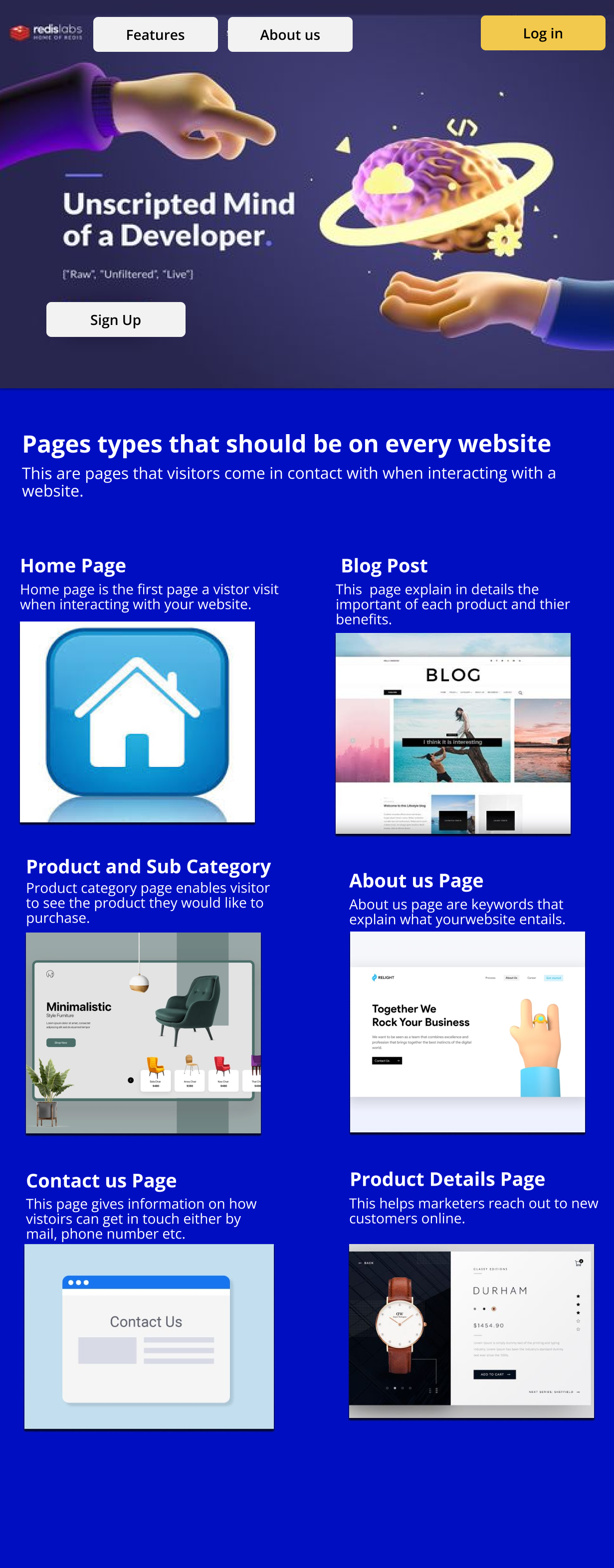
Page Types That Should Be On Every Website

It is possible for an SEO to determine which page is the most beneficial in terms of search engine optimization efforts. In this article, we’ll go through some of the most important page types that every website should have.

  • About Us
  • Home Page
  • Product Category & Sub-Categories
  • Contact Us Page
  • Blog Posts
  • Product Details Pages

About Us

The ‘About us’ page has been shown to have a major impact on website conversion time and time again. Visitors who are willing to shell out money for a service are likely to look at the About Us page at least once. For both traffic generation and conversion, the page is critical. Although optimizing the “about us” page may seem unusual, there are several keywords that can be used for this purpose. Optimizing the “about us” section of your website to include keywords relating to your products or services is possible.

Home Page

The story of a website begins with its home page. It gives a general idea of what the site is about. Because it is the first page a visitor sees when visiting a website, the home page tends to be the most popular. The homepage should live up to users’ expectations as the most important page on a website.

In order to attract visitors to your website, you should create a homepage that outlines all of its features. An overview of your company’s products, services and clients as well as the benefits of doing business with you should be included. You might think of your home page as the entry point to your website. Once on the website, the visitor can explore the various sections at their leisure. To make a lasting impression, make sure your homepage is interesting, useful, and clear of unnecessary distractions.

Product Category & Sub-Categories

Category and subcategory page optimization can open up a multitude of SEO opportunities for product-based businesses. Using the category and subcategory pages on your website, customers may get a clear picture of the things you sell and the options they have for making purchases. These pages are only tough because of their content. Page optimization necessitates content, yet the product list gets pushed to the bottom of the page as a result. Customers get annoyed since they have to scroll down a lot, something they don’t want to do.

Contact Us Page

Visitors are directed to your contact page if they wish to get in touch with you. In addition to email, a query form, phone numbers, and a WhatsApp number, users can also find information on how to get in touch(s). Businesses located close to their target audience are more likely to generate interest from them.

When it comes to improving the contact us page, there are a slew of things to keep in mind. Find out what people are searching for when they’re trying to find your business. On your contact page, include a map of your location. Make it easy for visitors to get in touch with you by including multiple ways for them to reach you in your address and phone number.

Blog Posts

Having too many pages on a website might have a negative effect on the user’s experience. It also has an effect on conversion. A blog could come in handy in this situation. There is no limit to the number of blogs you can add to your website. Multiple options are presented by the website’s blogs.

To begin with, it allows you to provide material that can’t be fully covered on traditional landing pages. Two, it gives you the ability to develop data that is specific to the searcher’s needs. Third, you may use it to improve your blog’s content in order to see an increase in both organic ranking and traffic.

Product Details Pages

In order to finish the purchasing process, buyers must first visit the product details page. This is where they keep track of all the products that are currently on the market. A customer’s purchasing cart is now full of things that have been well researched. There isn’t much area for material on product pages, making it tough to optimize them. Text blocks with keyword-rich content cannot be added to this site in the same way they may be.

It’s better to focus on improving the product detail page’s tags, such as title, description, alt, and headers, rather than dumping more content there. Websites with dynamic keyword placement can also be optimized. Search engine marketers may recommend using boilerplate content for a certain industry. My advice to you is to steer clear of this behavior.


The Best Image SEO Techniques to Use

E-commerce sites with a lot of images need to focus on image optimization. Potential visitors and search engine rankings can be negatively affected by ignoring image SEO. Visual search on Google and Bing has raised the importance of picture optimization. If you haven’t yet optimized your photos, now is the time to put your efforts into action. Image optimization best practices are discussed in this piece, and you should implement them right now.

  • Image Alt Text That’s Good for SEO
  • Image File name
  • Size of Image File
  • Image File Type
  • Image Site Map

Image Alt Text That’s Good for SEO

Image alt text, like the file name, is a significant ranking component for search engines. Alt text is a great way to assist search engines better understand the meaning of an image. As a result, photos are more likely to be properly cataloged.

In the case that an image fails to load or takes a long time to load, alt text is useful. Even without seeing the image, Google can infer context from the alt text. As a result of this, search engines are better equipped to find the most relevant image for a user’s search.

Image File name

Identifying your photographs is a good place to start when optimizing them. When titling an image, give it a name that is relevant and descriptive. The image’s filename should include keywords. In order for Google to understand what this image is all about, it is imperative that the image’s title be included. Img123.jpg is a name that has no SEO value. No one will use this name to look for a picture on Google because it gives the search engine no information about the picture.

Moreover, adding keywords does not equate to stuffing the text with them. A Google penalty is possible if this is deemed spam. Just give it a name that is significant and unique.

Image File Type

Formats for images used in posts and pages on blogs and websites are numerous and ever-changing. Each of these formats – JPEG, GIF, and PNG – has its own set of pros and cons. In terms of image quality, JPEG is frequently cited as the best image file format even after images have been compressed or resized.

Alternate image type Using PNG for logos is a terrific idea because it is the greatest format for designing small, high-resolution images. This can have an adverse effect on the page’s search engine optimization because of the larger file sizes associated with high-quality display.

However, GIFs shouldn’t be used for commercial purposes or to display images of beer. A JPEG image is the best choice since it can be compressed without compromising image quality.

Size of Image File

The user’s experience is directly impacted by the image’s size. A website’s pages load slower if an image is too large. Web pages can take longer to load if they have large file sizes.

Google now considers page speed as an important ranking factor, so making sure your website loads quickly has never been more important. It is possible to have tens of thousands or hundreds of thousands of huge photographs on a major ecommerce website, which can have a direct impact on your search engine rankings and image search results.

It’s not easy to reduce the size of a large number of files. It must be carried out in a methodical manner. Image file size can be reduced without sacrificing quality thanks to a slew of plugins and technologies.

Image Site Map

It’s like a website’s sitemap in that it’s easy to navigate. In the same manner that a website sitemap can be added, an image sitemap can be added to an existing one. This can help Google find your website’s images in a more systematic way. Site traffic is increased as a result of increased photo visibility in image searches.

Creating an image sitemap for your ecommerce website is highly recommended. Your website’s photos will be easier to find thanks to this technique. There are a number of options when it comes to creating a sitemap for your photographs. You can increase the likelihood that search engines will index your images by adding them to a sitemap.


6 Ways To Generate Quality Business Leads Through Instagram

Instagram leads can be generated in a variety of ways. Instagram lead adverts and other organic methods can be used to gain more leads from this network.

  • Use Instagram Lead Advertisement
  • Add Action Buttons to Your Profile
  • Focus On a Specific Goal When Applying Creativity
  • Optimize The Link In Your Bio
  • Partner with an Instagram Influencer
  • Run an Instagram Contest
  1. Use Instagram Lead Advertisement

Using Instagram lead advertising is a great way for businesses to get in touch with potential customers and get their contact information. It is possible to use these advertising to learn more about your customers and improve your direct marketing strategy. An Instagram business account is required to run lead advertising. As a result, you’ll need to set up your own Facebook Page.

  1. Add Action Buttons to Your Profile

Personalizing your Instagram account with action buttons is possible if you already have a business account. You can also provide a link to your contact information, such as your company’s email, phone number, and physical address. As a result, Instagram provides additional lead generating opportunities, such as the sale of books and the use of action buttons.

  1. Focus On a Specific Goal When Applying Creativity

The best way to generate more Instagram leads is with a strong call-to-action. Swipe up, shop now, and click on the link in our bio are all examples of two-to-six word phrases that can create a significant number of leads when used in conjunction with the relevant account content.

In order to attain the same advertising goal, your graphics and call-to-action should constantly function together. To get people to click on the link in your bio, make sure your post and caption are enticing. Your call-to-action should be the final straw that persuades your audience to take action.

  1. Optimize The Link In Your Bio

In order to maximize the link real estate in your bio, you must use it to its fullest extent, which will be immediately noticeable to customers. Your link should always bring customers to your Instagram account’s aim. For example, this could be an email sign-up, product purchase, or even a thank you.

  1. Partner with an Instagram Influencer

Using Instagram influencers to generate new Instagram leads can be a profitable strategy. Choose an Instagram influencer that is passionate about your product or service and can help spread the word about it. This will allow your relationship to be seen by a wider range of people by leveraging the followings of both of your social media profiles.

A person’s ability to be trusted is an equally important factor. Customers are more influenced by Instagram influencers than you are, especially if your brand is still very new.

  1. Run an Instagram Contest

The most creative way to collect leads on Instagram is through contests, discounts, or product promotions. Request that your followers participate in a survey or comment on a post in order to win a promotional prize. ‘ You can enhance the quantity of leads created for your account by including a “tag a friend” function in your post or by collaborating with a social media influencer.